northern front No end in sight: Israel’s north continues to suffer after 6 months of war
Hezbollah launched 1,200 attacks - 50,000 Israelis evacuated from their homes
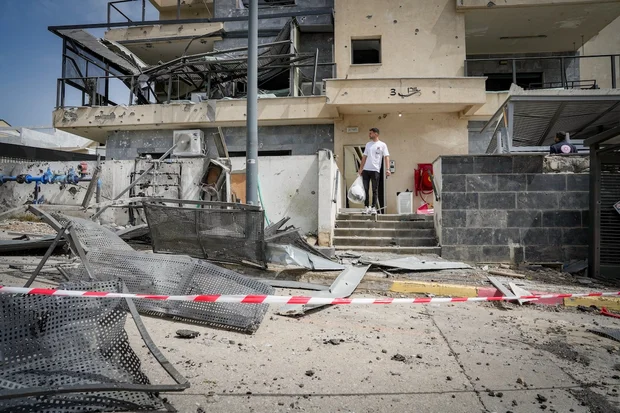
While the eyes of the world are focused on Israel’s war against Hamas in the Gaza Strip, this week also marked six months of intense warfare in Israel’s north against Hezbollah and its allied Iranian-backed proxies in Lebanon and Syria.
For the past few months, the attacks on Israel’s northern region have far surpassed any military threat posed to Israel’s south from the Gaza Strip. Hezbollah forces have so far claimed to have launched around 1,200 attacks, roughly 50 every week, and around 10 per day in recent weeks.
The real number is even higher, as Hezbollah doesn’t take official responsibility for every one of its attacks, and other allied groups have also pitched in, noted the founder of Alma Research Center, Lt.-Col. (Res.) Sarit Zehavi during a webinar summing up half a year of fighting in Israel’s north.
So far, these attacks have resulted in the deaths of seven Israeli citizens and 11 soldiers and forced some 50,000 residents out of their homes. Around 2,000 Israelis have submitted claims to the government for damage to their homes.
While at the start of the war, many in Israel feared a full-scale offensive from Lebanon, the first days of fighting made clear that Hezbollah sought to launch enough attacks to be seen as supporting Hamas, without provoking an all-out war with Israel.
This has held true until today. Hezbollah began its attacks by encouraging Palestinian groups to infiltrate Israeli territory, without much success.
The terror organization also began targeting Israel with anti-tank missiles, causing significant but limited damage. Anti-tank missiles have a range limited to 10 km (about 6 miles), with most missile systems requiring a direct line of sight.
Anti-tank missiles increased in frequency until around December, when Israel’s escalating airstrikes at Hezbollah targets managed to push many of its units back from the border, forcing it to change tactics.
Since then, the Alma Center has noted a marked increase in drone and rocket attacks. On the one hand, this is a good development for Israel, as anti-tank missiles are very accurate.
On the other hand, Zehavi noted that the large rocket salvos Hezbollah has launched lately are much less accurate but have more potential to cause damage and put larger areas at risk.
She also emphasized the increasing use of heavy Burkan-type rockets, with around half a ton of explosives. These rockets are difficult to intercept as they fly very low and can cause significant damage.
In March, Hezbollah for the first time launched a Burkan rocket at an Israeli community, underscoring a steady increase in attacks against civilian targets since October. To date, 43% of the targets struck in Israel have been civilian.
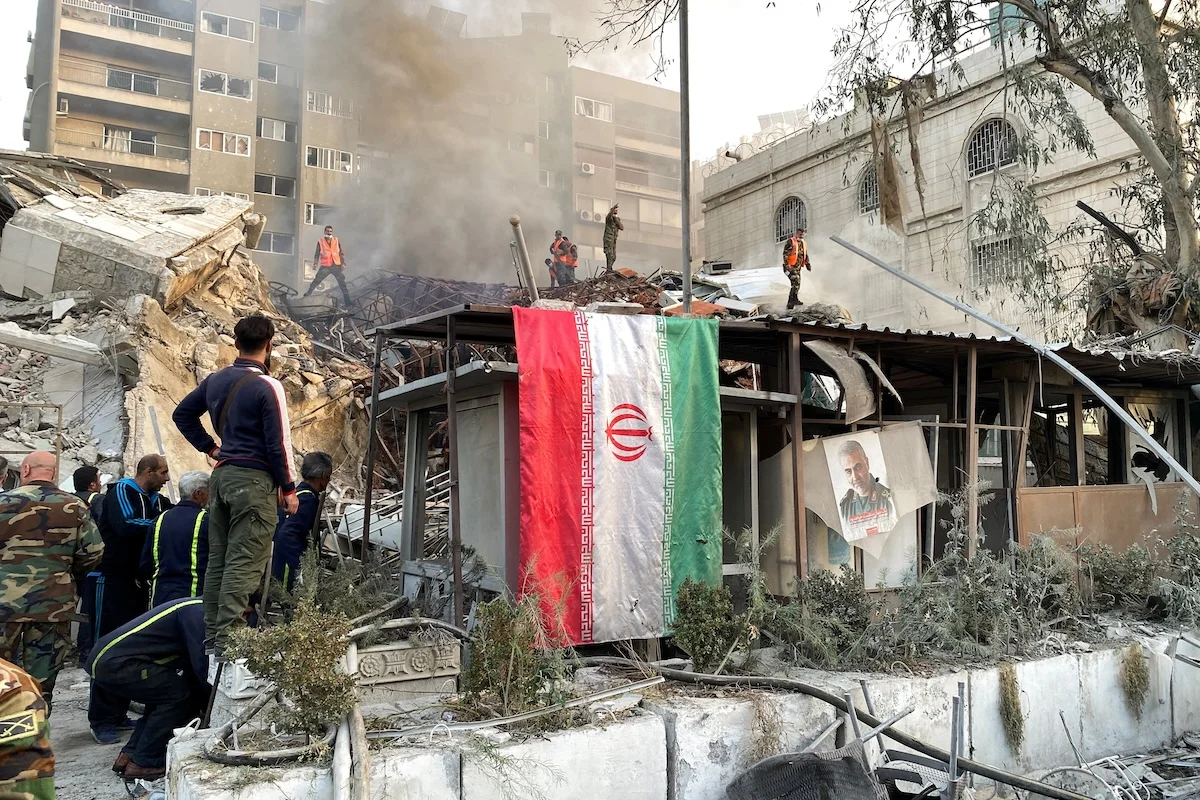
The northern arena can be seen as Iran’s front against Israel. The recently assassinated Iranian IRGC general, Mohammad Reza Zahedi, commanded this front, being responsible for coordinating the activity of the regime’s numerous proxies in Lebanon and Syria against Israel.
Besides Hezbollah, these include the Hamas branch in Lebanon, the Palestinian Islamic Jihad (PIJ) in Lebanon, Muslim Brotherhood-affiliated groups, the Shiite Amal movement, the Iranian-backed Imam Hossein Division – made up of Iraqis and Syrians – and several others.
Israel Defense Forces has claimed to have struck about 4,000 targets in Lebanon so far, including weapons caches, operation rooms, observation posts, etc. Most of those targets were close to the border, with 10% belonging to Hezbollah’s elite Radwan unit which, in the past, has bragged about its plans to invade Israel in a future war.
Around 66% of Hezbollah’s casualties were inflicted south of the Litani River – the demarcation line UN Resolution 1701 had determined as the group’s southern limit.
Israeli airstrikes included 18 targeted killings of senior commanders, such as Radwan Unit Commander Wissam al-Tawil, the aforementioned IRGC General Zahedi, and several other Iranian officers, most killed in Syria.
Despite this, Alma estimates that Hezbollah’s rocket fire array and drone units haven’t been seriously impacted by Israel’s strikes, and while Hezbollah’s infrastructure suffered some damage, it is likely to be restored within a short time.
Despite U.S. efforts at diplomatic mediation, there seems to be no end in sight for the current situation on Israel’s northern border.
Hezbollah continues attempting to avoid “accusations that it ignores the Palestinians, but not [do] enough to pull Israel into a full-scale conflict,” a recent Alma report noted.
To achieve this objective, Hezbollah closely sticks to various “equations,” for example: “Attack by a Hezbollah UAV = an IDF attack on Hezbollah air unit targets.”
“For that matter, an airstrike by Hezbollah using UAVs will be answered by an attack on a quality target, seemingly connected to Hezbollah’s aerial system, deep inside Lebanon. In addition, an attack on an IDF UAV by anti-aircraft fire will lead to an IDF attack on Hezbollah’s air defense systems,” according to the report.
“Accordingly, Hezbollah will respond by attacking air force bases which, it claims, are part of the IDF’s air defense system.”
With Hezbollah and its Iranian handlers seemingly satisfied and not interested in escalating the fighting at the moment, the ball is in Israel’s court to alter the situation.
For now, Israeli defense officials continue to publicly threaten Hezbollah, while politicians keep raising the issue with the U.S. Biden administration in an effort to reach a diplomatic solution.
Popular article:

interview Easter message of resurrection hope amid war at Jerusalem's Garden Tomb

biblical commentary Let my people go: a Passover message for today

4 IDF soldiers killed, 2 wounded in fighting in southern Lebanon, as Israel eliminates dozens of Hezbollah terrorists

Receive latest news & updates
A message from All Israel News
Help us educate Christians on a daily basis about what is happening in Israel & the Middle East and why it matters.
For as little as $10, you can support ALL ISRAEL NEWS, a non-profit media organization that is supported by readers like you.
Latest articles:

With over 85% of votes counted, Israeli elections end without clear path to viable coalition

Trump to impose unity government on Israel? - Reports claim US president pushing for government without controversial ministers
US tells Gulf nations to prepare for possible military campaign in Iran following midterm elections
The last votes that could change everything – Israel awaits count of 600,000 'double envelopes'

Election uncertainty weighs on shekel as Israeli stocks fall