Israeli researchers develop AI to translate ancient Akkadian texts
Akkadian is an ancient Semitic language that developed in ancient Mesopotamia
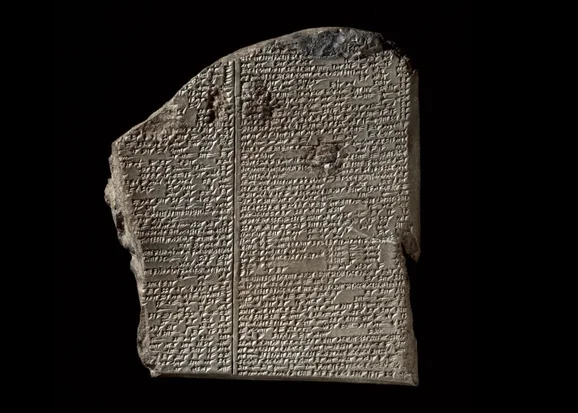
Israeli researchers from Tel Aviv University and Ariel University have created a unique artificial intelligence model that automatically translates ancient Akkadian texts written in cuneiform into English. Cuneiform is known as one of the most ancient forms of writing in human history, typically written on a clay tablet.
Akkadian is an ancient Semitic language that developed in ancient Mesopotamia and eventually became extinct some 2,000 years ago.
The Israeli researchers – Dr. Gai Gutherz, Dr. Jonathan Berant, Dr. Omer Levy and Dr. Shai Gordin – published their findings in an article entitled: “Translating Akkadian to English with Neural Machine translation.”
A large number of clay tablets written in the cuneiform script contain valuable information about the ancient Middle East region. However, the Israeli experts noted that most of these historical documents remain in their original form.
“Yet, most of these documents remain untranslated and inaccessible due to their sheer number and the limited quantity of experts able to read them,” they wrote.
The researchers also stressed the complexity of applying artificial intelligence to translate ancient texts into English.
“It can be a complex process, since it commonly requires not only expert knowledge of two different languages but also different cultural milieus,” they explained. “Digital tools that can assist with translation are becoming more ubiquitous every year, tied to advances in fields like optical character recognition (OCR) and machine translation. Ancient languages, however, still pose a towering problem in this regard. Their reading and comprehension require knowledge of a long-dead linguistic community, and moreover, the texts themselves can also be very fragmentary.”
The importance of artificial intelligence is growing and expected to play an increasingly prominent role in the future of human history.
While the applications for AI seem nearly endless, there are also potential problems with such technology. In his paper, “The Coming Technological Singularity: How to Survive in the Post-Human Era,” computer scientist and author Vernor Vinge recently warned that artificial intelligence could potentially pave the path towards a “post-human” era.
Popular article:

interview Easter message of resurrection hope amid war at Jerusalem's Garden Tomb

biblical commentary Let my people go: a Passover message for today

4 IDF soldiers killed, 2 wounded in fighting in southern Lebanon, as Israel eliminates dozens of Hezbollah terrorists

Receive latest news & updates
A message from All Israel News
Help us educate Christians on a daily basis about what is happening in Israel & the Middle East and why it matters.
For as little as $10, you can support ALL ISRAEL NEWS, a non-profit media organization that is supported by readers like you.
Latest articles:

With over 85% of votes counted, Israeli elections end without clear path to viable coalition

Trump to impose unity government on Israel? - Reports claim US president pushing for government without controversial ministers

US tells Gulf nations to prepare for possible military campaign in Iran following midterm elections

The last votes that could change everything – Israel awaits count of 600,000 'double envelopes'

Election uncertainty weighs on shekel as Israeli stocks fall