











Intel doubles down on Israel's chip manufacturing with $15 billion investment
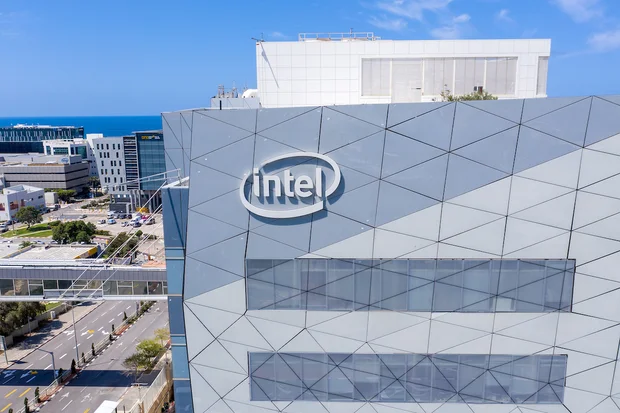
In a time when some companies are withdrawing from Israel, Intel (NASDAQ: INTC) has made a surprising decision to expand its operations in the country. The Ministry of Finance has revealed that an agreement has been reached with Intel to upgrade its chip factory currently under construction in Kiryat Gat, with plans to double its size. Two years ago, Intel's CEO Pat Gelsinger announced a $10 billion investment in a new factory, and now the company has committed to an additional $15 billion. Under the deal Intel will pay a 7.5% tax rate, up from the current 5%, as reported by the ministry.
This agreement is essentially an extension of a deal that was initiated during Moshe Kahlon's tenure as Minister of Finance. At that time, the construction of the plant was approved with an initial investment of NIS 37.5 billion, which included a state grant of approximately NIS 4 billion. In total, Intel's investments in the construction and upgrading of the factory will amount to around NIS 90 billion, reflecting the increased demand for chip manufacturing processes compared to the past.
In return for its investments, Intel will receive a state grant of approximately $3.12 billion (11.1 billion shekels), which is the largest grant ever awarded to a private company in Israel. This grant constitutes 12.5% of the total deal and will be disbursed gradually by the Investment Authority, contingent upon meeting employment and production targets.
At present, the agreement between Intel and the Israeli government remains preliminary and awaits formal confirmation from Intel. It's important to recognize that Intel has its own strategic considerations when it comes to upgrading its production facilities. The company has historically shown a preference for enhancing its existing plants, as it has done with previous facilities in Jerusalem and Kiryat Gat.
Intel Israel responded by stating, "Our intention to expand our production capacity in Israel stems from our commitment to meeting future production needs and supporting Intel's IDM 2.0 strategy. We appreciate the continued support from the Israeli government."
In recent years, Intel has faced a significant gap compared to its competitors in terms of chip development and production. The company has realized that its current structure, where it handles both chip development and manufacturing internally, has become costly, inefficient, and prone to design and production failures.
With the pending acquisition of Tower Semiconductor, Intel has unveiled a new strategic business move to become a chip manufacturer open to producing for other companies. This is a departure from its current approach of primarily manufacturing chips for internal use. In the future, Intel aims to produce chips for leading developers such as Apple, Qualcomm, Arm, Nvidia, and Amazon with which it currently competes.
The demand for this shift in strategy is evident, as major companies heavily rely on chip factories in East Asia, particularly the TSMC factories in Taiwan and Samsung in South Korea. This heavy dependence exposes Western countries to geopolitical risks in the event of conflicts between the United States and China. To address this concern, the American administration passed a chip law last year, allocating $52 billion to incentivize chip makers to relocate their factories from the East to the West. For instance, Intel has committed to building new factories in Ohio and Arizona, while TSMC and Samsung are constructing facilities in Arizona and Texas.
Furthermore, it's noteworthy that Intel has recently announced multi-billion-dollar investments in Europe as well. This demonstrates that Intel is not solely relying on one location and is spreading its investments across Western countries where it operates. According to reports from the German press, the German government has pledged to increase its grant for the construction of a new factory to 10 billion euros, a substantial increase compared to the previous commitment. This investment is intended for a chip factory with a total investment of 20 billion euros.
Clearly, many countries are actively vying to attract major players like Intel to their shores, recognizing the potential for job creation and future economic growth that comes with such investments. Consequently, it becomes paramount for the Israeli government to ensure the creation of a favorable environment and provide all the necessary conditions to retain Intel's presence in Israel.
This article originally appeared here and is reposted with permission.
Popular article:

interview Easter message of resurrection hope amid war at Jerusalem's Garden Tomb

biblical commentary Let my people go: a Passover message for today

4 IDF soldiers killed, 2 wounded in fighting in southern Lebanon, as Israel eliminates dozens of Hezbollah terrorists

Receive latest news & updates
A message from All Israel News
Help us educate Christians on a daily basis about what is happening in Israel & the Middle East and why it matters.
For as little as $10, you can support ALL ISRAEL NEWS, a non-profit media organization that is supported by readers like you.
Latest articles:

Israeli Arab charged with spying for Iran, citing ideological motives

3 Israelis injured, 1 Palestinian woman killed in violent incident outside new Jericho settlement

Israel rises to world's 25th-largest economy despite war, boycott calls

US envoy Waltz visits Lebanon amid discussions over new peacekeeping force, stalled Hezbollah disarmament

Despite years of war, Israeli children and teens report high levels of life satisfaction, international surveys find