











opinion The 'New Israel' myth: How Americanism became a subtle form of Replacement Theology
Introduction: The Hebraic Roots of the American Experiment
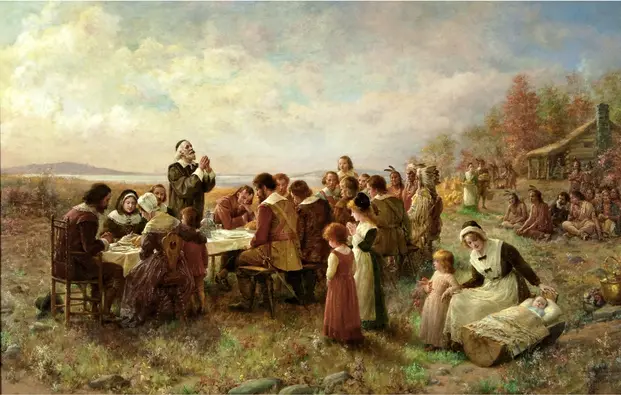
When the Pilgrims stepped off the Mayflower onto the rocky shores of Cape Cod in November 1620, they carried with them more than just the hope of religious freedom; they carried a Hebraic worldview steeped in the pages of the Old Testament. As Governor William Bradford later recorded, these early settlers viewed their perilous crossing of the Atlantic through the lens of the biblical Exodus. To them, King James I was Pharaoh, the ocean was the Red Sea, and the North American wilderness was their "New Canaan"—a "New Israel" where they might establish a godly commonwealth.
Over the next four centuries, this motif became deeply woven into the fabric of American civil religion. From John Winthrop’s famous "City upon a Hill" sermon in 1630 to Yale President Ezra Stiles’ 1783 declaration of "God’s American Israel," and from Herman Melville’s claim that Americans were "the Israel of our time" to Ronald Reagan’s invocation of a "shining city upon a hill," the United States repeatedly cast itself in the role of a modern-day "chosen people."
While this Hebraic heritage undeniably fostered a profound respect for the Hebrew Scriptures, the Jewish people, and democratic governance, it also gave rise to something far more problematic. Over time, this biblical framing evolved into "Americanism"—a quasi-religious civic creed that has not only reshaped traditional Jewish and Christian behavior, but has functioned as a subtle, nationalized form of Replacement Theology.
From Biblical Metaphor to "Americanism"
To understand how this happened, we must first acknowledge what the early Pilgrims and Founders got right. Unlike much of Europe at the time, which was entrenched in medieval antisemitism and papal hostility toward the Jewish people, early American Protestants held the Hebrew Bible in supreme esteem. Bradford studied Hebrew so he could read the Scriptures in their original tongue, and the Founders looked to the ancient Israelite republic of the Judges as a model for constitutional federalism.
Yet, history demonstrates that whenever a gentile nation or institution claims the title of "Israel" for itself, theological confusion inevitably follows.
In its classic ecclesiastical form, Replacement Theology (or supersessionism) teaches that the Christian Church has permanently superseded the Jewish people as God’s chosen covenant nation, thereby transferring all of Israel’s biblical promises to the Church while leaving the curses upon the Jews. When early Americans—and later proponents of unchecked American exceptionalism—declared the United States to be "God’s American Israel," they inadvertently secularized and nationalized this very same error. Instead of the Church replacing Israel, the American republic was cast as the new covenant people inheriting the Promised Land.
Over the generations, this mindset crystallized into what sociologists call "American civil religion"—or simply Americanism. While not a formal church, Americanism operates like a theology complete with its own sacred texts (the Declaration of Independence and the Constitution), prophets and martyrs (Washington and Lincoln), and holy days (the Fourth of July and Thanksgiving).
How Americanism Reshaped—and Replaced—Biblical Faith
Because Americanism absorbed so much biblical language, it gradually began to reshape and even replace authentic Christian and Jewish religious behavior across the political spectrum:
First, it substituted civic values and self-fulfillment for covenant obedience. For many Americans, the demanding doctrines of historic Christianity and Judaism were slowly replaced by a feel-good civic spirituality—one focused on individualism, material prosperity, and the "pursuit of happiness" rather than repentance, holiness, and submission to God's Word. In Jewish life, traditional observance of Halakha(Jewish law) was often traded for secular American civic ideals, while in Christian circles, patriotism, and consumer culture frequently overshadowed biblical discipleship.
Second, it birthed the Social Gospel and political utopianism. In the late 19th and early 20th centuries, the "New Israel" impulse took a progressive turn through the Social Gospel movement. Led by figures like Walter Rauschenbusch, this movement equated the biblical "Kingdom of God" with American democratic and social reform. By suggesting that human ingenuity and American political activism could build heaven on earth, the Social Gospel shifted the focus away from personal redemption and God’s prophetic timetable, turning political activism into a substitute for traditional faith.
Third, it distorted the biblical narrative of the Land and fostered national pride. In Scripture, God’s covenant with Abraham, Isaac, and Jacob is tied to a specific, eternal geographic inheritance—the Land of Israel (Genesis 17:7–8). By applying the title of "New Canaan" to North America, early settlers detached God’s promises from their actual historic anchor in the Middle East—even going so far as to cast Native Americans as biblical "Canaanites" to justify westward expansion. Furthermore, equating a fallible modern nation-state with God's chosen people fostered spiritual hubris. As Abraham Lincoln wisely warned in 1861, America could at best be called an "almost chosen people"—a nation accountable to moral truth, not entitled to unconditional divine favor.
Fourth, it obscured God’s ongoing purpose for the Jewish people. If America was already the "New Israel" and the "Promised Land," what need was there for the physical restoration of the Jewish people to Zion? For centuries, this mindset blinded many Western Christians to the prophetic significance of the Jewish return to their ancient homeland, fostering either indifference or outright opposition to Zionism among mainline Protestant establishments.
From Replacement to Restoration: The True Biblical Alignment
Providentially, the rise of modern Christian Zionism over the past century has helped correct this theological drift. Rather than viewing the United States as a substitute for ancient Israel, biblically grounded Christians today recognize that God’s covenant with the Jewish people is irrevocable (Romans 11:28–29). The rebirth of the State of Israel in 1948 and the reunification of Jerusalem in 1967 stand as living proof that the God of Abraham, Isaac, and Jacob keeps His promises to the physical descendants of Israel in their ancestral land.
In this light, America’s true biblical calling is not to be the New Israel, nor to replace the Jewish people on the stage of redemptive history. Rather, America’s highest privilege—and the true secret to its enduring blessing—lies in standing alongside the one and only Israel, honoring the timeless promise of Genesis 12:3: "I will bless those who bless you."
Conclusion: Rejecting Every Form of Replacement Theology
Replacement Theology has proven to be one of the most destructive errors in Church history, whether clothed in the robes of medieval ecclesiology, modern secular anti-Zionism, or the well-meaning rhetoric of Americanism. When national identity—whether expressed through conservative patriotism or the progressive Social Gospel—usurps the biblical covenants and reshapes the behavior of God's people, it becomes just another form of supersessionism.
While we rightly celebrate the rich Hebraic values that shaped the Pilgrims, the Founders, and the American republic, we must draw a clear biblical boundary. There is no "New Israel" in North America, nor anywhere else on earth. There is only one Israel—the eternal covenant people of God, restored in our generation to the land of their forefathers. By rejecting this subtle form of national Replacement Theology, Americans can embrace a far nobler and more biblical role: not as usurpers of Israel’s name, but as faithful friends, allies, and watchmen on the walls of Jerusalem.
Popular article:

interview Easter message of resurrection hope amid war at Jerusalem's Garden Tomb

biblical commentary Let my people go: a Passover message for today

4 IDF soldiers killed, 2 wounded in fighting in southern Lebanon, as Israel eliminates dozens of Hezbollah terrorists

Receive latest news & updates
A message from All Israel News
Help us educate Christians on a daily basis about what is happening in Israel & the Middle East and why it matters.
For as little as $10, you can support ALL ISRAEL NEWS, a non-profit media organization that is supported by readers like you.
Latest articles:

68% of Republican primary voters in 4 key states view Israel favorably – poll

Israel brings 250 young American leaders from all 50 states to strengthen ties with next generation

Somaliland ambassador says Berbera port could become trade hub linking Israel with East Africa

More than 1,000 University of Michigan faculty back resolution supporting activists charged with targeting Jews

Israeli medical officials warn hospitals remain unprepared for future war with Iran