Hamas reportedly open to interim gov’t in Gaza as hostage deal talks progress amid diplomatic flurry
Parallel negotiations are being held in Qatar, Egypt and Israel this week
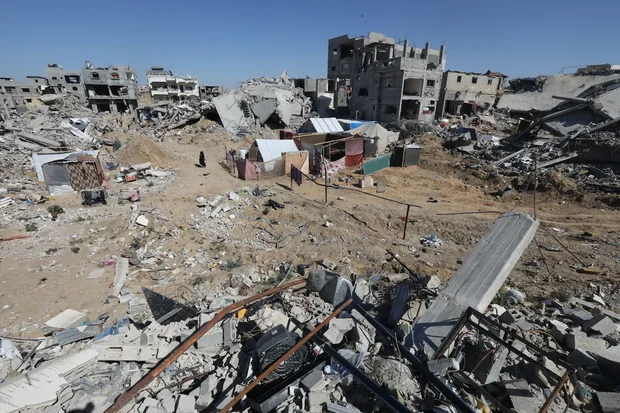
Hamas leaders agreed to relinquish power over the Gaza Strip to an interim government, the Washington Post reported Wednesday, amid a flurry of shuttle diplomacy across the Middle East that seemed to substantially advance the ongoing talks between the terror group and Israel in recent days.
Despite some officials involved in the talks expressing optimism about the progress of the negotiations, Hamas stated on Thursday: “Until this moment, the mediators have not informed us of any news regarding the ceasefire and prisoner exchange. The occupation [Israel] continues to resort to procrastination to gain time, aiming to derail this round of negotiations as it did in previous rounds.”
Speaking to the Times of Israel before talks resumed in Qatar on Wednesday, a U.S. official said significant progress was made the day before by U.S., Egyptian, Qatari and Israeli negotiators in Egypt.
In the evening, Israeli outlets reported that Mossad Director David Barnea returned to Israel after talks in Qatar lasted for about four hours.
White House envoy Brett McGurk also traveled back from Qatar to Israel on Thursday, where he and Defense Minister Yoav Gallant talked about the “progress achieved” in the hostage deal talks.
Separately, an Israeli security delegation continued talks in Egypt to find an arrangement regarding Israel’s freedom to prevent smuggling on the border between Gaza and Egypt, where the IDF has taken over the Philadelphi Corridor and the Rafah border crossing.
Against the backdrop of this shuttle diplomacy, Washington Post’s foreign affairs columnist David Ignatius quoted a White House senior official saying that a “framework is agreed” and the talks were now focusing on the details of its implementation.
Part of the agreed-upon framework, Ignatius wrote, was the acceptance by both Israel and Hamas of a plan for “interim governance,” that would be implemented in the second phase of the three-phase framework.
Hamas confirmed it is “prepared to relinquish authority to the interim governance arrangement,” a U.S. official told Ignatius.
“Security would be provided by a force trained by the United States and backed by moderate Arab allies, drawn from a core group of about 2,500 supporters of the Palestinian Authority in Gaza who have already been vetted by Israel,” according to the report.
Israel's Prime Minister Benjamin Netanyahu has so far strongly rejected the notion that the Palestinian Authority could be involved in ruling Gaza after the war.
While several media outlets hailed the report as a significant step toward an agreement, veteran Israeli war reporter Ron Ben Yishai cautioned that Hamas may have its own motivations for giving up governance.
"Behind this concept is an old intention of Hamas to copy the pattern of conduct of Hezbollah in Lebanon, in such a way that the organization will not have civilian control over the Strip and will not be required to take care of the well-being and needs of the residents," he wrote on Ynet News.
"Instead it will be able to concentrate and invest all its money in 'resistance,' that is, preparing for war with Israel. And since it is the strongest military force in the Strip, it is actually the one who will dictate what happens behind the scenes... this is what Hezbollah is doing in Lebanon."
The main stumbling block in the current negotiations, which began when Hamas reportedly dropped a precondition that Israel commit to an end of the war beforehand, is the exact wording of the conditions for the transition into the second phase.
During a first phase lasting six weeks, which would include the release of 33 Israeli hostages from captivity in Gaza, alongside the release of hundreds of convicted Palestinian terrorists from Israeli prisons, the plan envisions parallel negotiations over the details of phase two.
“If the negotiations take longer than six weeks for phase one, the ceasefire will still continue as long as negotiations continue,” according to the UN resolution affirming the framework, which was presented by U.S. President Joe Biden in May.
The American, Qatari and Egyptian mediators would “work to ensure negotiations keep going until all the agreements are reached and phase two is able to begin.”
Israel fears that Hamas will exploit this to keep the negotiations running, preventing Israel from either freeing the hostages or continuing the war.
“In practice, the agreement states that after 42 days – if no agreement is reached – the temporary ceasefire will become one that actually lasts until the deal is reached, no matter how long it takes. A deal that includes the permanent ceasefire… In other words, Israel binds itself to an absolute commitment to continue the negotiations, until a deal is reached,” an informed source recently told Ynet News.
According to the Washington Post report, hammering out the details of the final agreement will take some time and an agreement isn’t imminent.
Popular article:

interview Easter message of resurrection hope amid war at Jerusalem's Garden Tomb

biblical commentary Let my people go: a Passover message for today

4 IDF soldiers killed, 2 wounded in fighting in southern Lebanon, as Israel eliminates dozens of Hezbollah terrorists

Receive latest news & updates
A message from All Israel News
Help us educate Christians on a daily basis about what is happening in Israel & the Middle East and why it matters.
For as little as $10, you can support ALL ISRAEL NEWS, a non-profit media organization that is supported by readers like you.
Latest articles:
North American Jewish organizations to recruit 100 professionals to combat antisemitism
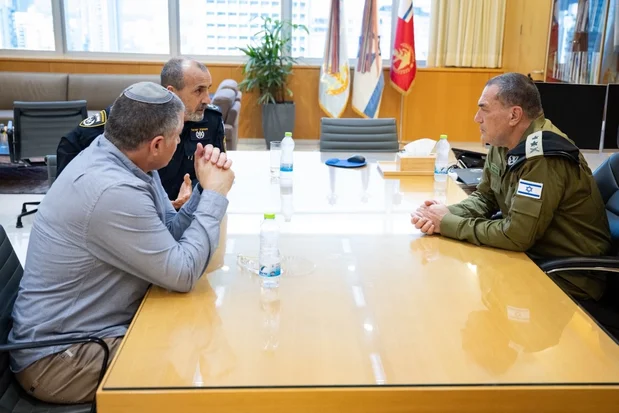
‘No need’ for pre-election Iran strike, IDF chief says as gov’t, opposition trade blame for potential escalation – report
terror attack 2 Israeli soldiers killed, 2 terrorists eliminated in Hebron shooting; IDF says much larger attack was prevented
analysis A people dwelling securely? Israel’s strategic standing, 3 years after Oct 7
Hamas on wheels: What I found in Dearborn reveals a troubling history and a battle over Israel