










opinion Israel should make room for Ra’am in the next government
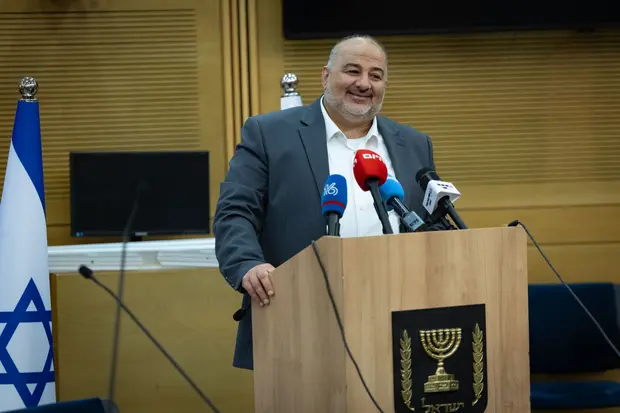
Earlier this month, I argued that Arab members of the Knesset should stay in the chamber for Hatikvah, Israel's national anthem. Mansour Abbas and his colleagues in Ra’am stayed. I still believe it was fair to ask that of our representatives. But if I’m going to ask Arab lawmakers to take their place in the life of this country, I owe them some consistency when they ask to take their place in its government.
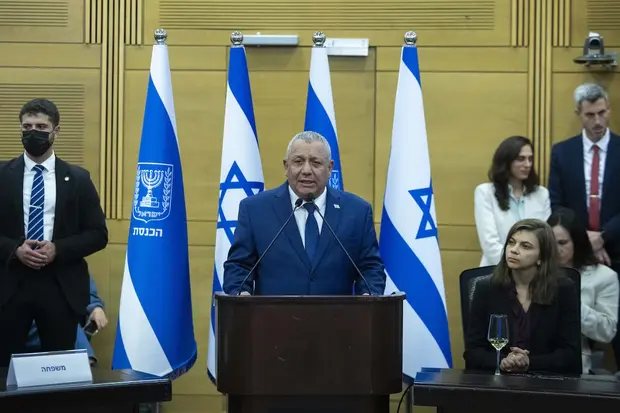
Gadi Eisenkot has been given the first opportunity to form Israel’s next government. I think he should offer Ra’am a place in it. His bloc holds 48 seats, and Ra’am’s eight would bring him to 56. He would still have work to do. Even so, there are good reasons to make that call, and some of them will matter long after we’ve forgotten who needed how many seats this November.
For one thing, we already know what happens when Mansour Abbas gets that call. In 2021, the leader of an Islamist party agreed to serve in a government headed by Naftali Bennett. It took some explaining on both sides. Abbas had to go home to Arab voters and defend his decision to help make a right-wing Jewish politician prime minister. He did it because he believed he could get more done for the people who elected him by joining the coalition.
On balance, I think he made a good case. Ra’am helped the government pass Israel’s first new state budget since 2019. It secured funding to fight crime in Arab communities and pushed through legislation allowing some Arab homes to be connected to the electricity grid. Anyone who followed the arguments over that electricity law knows the limits of the partnership. Abbas had to negotiate over which homes would qualify, and some of his voters thought he conceded too much. That strikes me as a perfectly healthy argument to have. An Arab politician had exercised power, and Arab voters could judge what he had done with it.
Abbas was equally direct about the country he had agreed to help govern. “The State of Israel was born as a Jewish state, and it will remain one,” he said in 2021. He made the point in Arabic as well as in Hebrew. As an Arab Christian who believes in Israel’s future as a Jewish state, I appreciate what it takes for the leader of an Islamic party to say that to his own community. I also think Israelis who have spent years asking Arab leaders to say precisely those words ought to give some thought to their answer when one does.
Last month, 337,720 Israelis voted for Ra’am, up from 194,047 in 2022. The Joint List won more seats, eleven to Ra’am’s eight, but those eleven are divided among Hadash, Ta’al and Balad. Ra’am is now the largest individual Arab party in the Knesset. Arab turnout rose sharply, and voters had several places to take their votes. Nearly 144,000 more chose Ra’am than four years ago, knowing exactly what Abbas had been willing to do with the previous five seats they gave him. That result deserves a more serious reading than lumping all nineteen seats together under “the Arab parties” and moving on.
There are fair questions for Abbas. How would his party vote if it opposed a security decision the government considered essential? What commitments would it make on the budget? Where would it draw the line and leave? I’d like to hear his answers. I’d also like to hear the answers from every other party Eisenkot approaches. If a negotiation breaks down over a genuine disagreement, both sides can explain it to the public. What is much harder to explain is a refusal to negotiate in the first place because the people on the other side of the table are Arabs.
Consider how that sounds to an eighteen-year-old Arab Israeli voting for the first time. She grows up hearing that Arabs make up roughly a fifth of this country and that young people like her ought to take a greater interest in its future. So she looks at the options and votes for the party that has already shown it can work with Jewish partners. What do we tell her if, the morning after the election, the very thing she voted for is considered out of bounds? How many times do we think she’ll find “go out and vote” convincing?
Israel has an interest in giving her a better answer. Take organized crime. A government trying to persuade Arab shopkeepers to report extortion has a great deal to gain from a coalition partner whose own voters can tell it why they’re afraid to go to the police. Give that party a hand in shaping the response and a share of the responsibility if it fails. A shopkeeper who can open his business safely the next morning has gained something. So has the state that asked him to trust it.
There is a message here for people abroad who call Israel an apartheid state and say Arab citizens are excluded from power. An Arab party negotiating the national budget, voting on legislation it helped write and answering to the public for the outcome gives Israelis something concrete to point to. But the person whose opinion matters most to me is that young woman who just cast her first ballot. She deserves to see what her vote can do here at home, whatever anyone overseas makes of it.
I stand by what I wrote about the anthem. When the Knesset rises for Hatikvah, I want my representatives in the room. When the ceremony is over and the work of governing begins, I want them in that room, too.
Popular article:
interview Easter message of resurrection hope amid war at Jerusalem's Garden Tomb

biblical commentary Let my people go: a Passover message for today

4 IDF soldiers killed, 2 wounded in fighting in southern Lebanon, as Israel eliminates dozens of Hezbollah terrorists

Receive latest news & updates
A message from All Israel News
Help us educate Christians on a daily basis about what is happening in Israel & the Middle East and why it matters.
For as little as $10, you can support ALL ISRAEL NEWS, a non-profit media organization that is supported by readers like you.
Latest articles:

Israeli Presidential Medal of Honor to be awarded to Evangelical Christian for 1st time
netanyahu trial Netanyahu corruption trial close to collapse as judges recommend dropping most charges, including bribery
Israel kills new Hamas internal security chief day after eliminating his predecessor
Former Israeli hostage Amit Soussana nominated for 2027 Nobel Peace Prize for advocacy against sexual violence in war
No hope of unity government between Bibi & Gadi, Cabinet Minister Amichai Chikli tells ALL ISRAEL NEWS – also blasts effort to convict Netanyahu of corruption as 'insane'